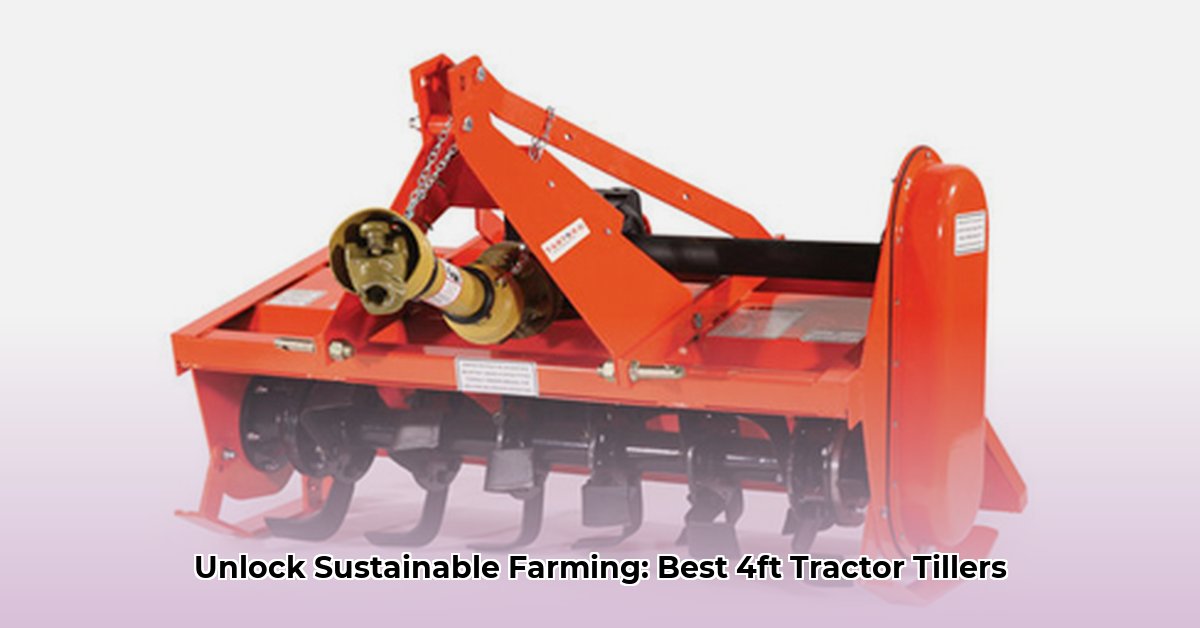
Choosing the right 4-foot tiller for your tractor is crucial for sustainable farming. This guide helps you select a tiller that optimizes efficiency, protects the environment, and improves your bottom line. We'll cover key factors to ensure you make an informed decision. For more detailed information on tillers for smaller tractors, check out this helpful resource: small tractor tillers.
4 ft Tiller for Tractor: Optimizing Your Sustainable Practices
This guide focuses on choosing a 4-foot tiller that balances effectiveness with environmental responsibility. Understanding the key factors below will empower you to make a sustainable choice for your farm.
Powering Up: Matching Tractor and Tiller Horsepower
Matching your tractor's horsepower to your tiller's requirements is critical. Underpowering leads to inefficient operation and potential damage; overpowering is wasteful. Consult your tractor's manual for recommended PTO (Power Take-Off) horsepower. Don't forget that choosing the right tiller means considering the fuel efficiency of your equipment. How can you find the optimal balance between efficiency and power?
Digging Deeper: Tillage Depth and Width for Soil Health
Tillage depth significantly impacts soil health. Shallow tillage (only disturbing the topsoil) preserves soil structure and microbial life, minimizing disruption. However, compacted soils may require deeper tillage. A 4-foot width offers a good balance between efficiency and manageability for most fields. Given the impact of tillage depth on soil microorganisms, what depth is best for your soil type and crops?
Material Matters: Sustainability and Durability in Tiller Construction
The tiller's material impacts its environmental footprint and lifespan. Steel tillers are durable but heavier, increasing fuel consumption. Lighter materials, like aluminum alloys, offer fuel efficiency but may be less durable. Prioritize recycled materials whenever possible, reducing your environmental impact. What balance best suits your needs and long-term goals?
PTO Shaft Compatibility: Ensuring Safe and Effective Operation
The PTO shaft connects your tractor to the tiller; proper compatibility is vital for safety. A mismatch can lead to dangerous situations. Always verify compatibility between your tractor's PTO specifications and the tiller's requirements. This is a crucial step for safety and to avoid costly mistakes.
Maintenance and Repairs: Minimizing Downtime and Maximizing Lifespan
Easy maintenance and readily available parts are crucial for minimizing downtime. A tiller with a simple design and easily replaceable parts will save you time and money. Prioritize simplicity over overly complex features. How can you ensure that your chosen tiller provides optimal performance while reducing maintenance demands?
Fuel Efficiency: Minimizing Your Environmental Footprint
Fuel efficiency is a significant factor in sustainable farming. Lighter tillers and efficient designs consume less fuel, reducing your operating costs and environmental impact. Consider the total cost of ownership, including fuel consumption over the machine's lifespan. What is the best way to compare tillers in terms of their fuel efficiency per acre?
Minimizing Soil Compaction: Maintaining Soil Health
Excessive tillage compacts soil, hindering water and air penetration. Research tiller designs to find the best method for minimizing soil compaction. Understanding the long-term effects on soil structure is vital for sustainable practices. How can you balance effective soil preparation with the preservation of healthy soil structure?
Step-by-Step Guide to Choosing Your Sustainable Tiller
- Assess your farm's needs: Consider soil type, acreage, crops, and farming practices.
- Check your tractor's capabilities: Verify PTO horsepower and shaft specifications.
- Research and compare tillers: Examine specifications, features, and user reviews.
- Consult with other farmers: Gather insights from experienced farmers in your area.
- Analyze total costs: Factor in purchase price, fuel costs, maintenance, and potential repairs.
- Make your informed decision: Choose the tiller that best aligns with your sustainable farming goals.
Sample Tiller Comparison (Hypothetical)
| Feature | Tiller A (Steel) | Tiller B (Lightweight Alloy) | Tiller C (Recycled Steel) |
|---|---|---|---|
| Width | 4 ft | 4 ft | 4 ft |
| Weight | 550 lbs | 300 lbs | 450 lbs |
| Horsepower Req. | 35 hp | 25 hp | 30 hp |
| Material | Steel | Lightweight Alloy | Recycled Steel |
| Estimated Fuel Use/Acre | Moderate | Low | Moderate |
| Price | $1600 | $2000 | $1750 |
| Ease of Maintenance | Moderate | High | Moderate |
Remember: Sustainability involves balancing cost-effectiveness with environmental responsibility. The "best" tiller depends on your specific needs and commitment to sustainable practices. Consult agricultural experts for further guidance.